William AI continues to evolve: from Teach William to Guidance
Guidance drives William adoption

William AI has been evolving since its launch in March. As an AI bookkeeping agent, it helps practices categorise transactions, chase documents from inboxes and, ultimately reduce manual admin.
With each iteration, William has become more capable, shaped by how practices actually use it.
When it comes to building a bookkeeping AI, while trust is certainly part of the story, what’s really shaped our approach is getting adoption right.
Making the feature easier to understand
When William launched, one of its core capabilities was called Teach William: a way for accountants and bookkeepers to give William natural language guidance about how a client's business works, so its suggestions get more accurate over time.
"One misconception that I noticed about William when we first launched GA is that the way that we phrased 'Teach William,' users thought that William didn't work out of the box and that you had to teach it how to work," says Tallulah Watson, Senior Product Designer at Apron.
The wording didn't make the distinction clear that ‘Teach William’ was an additional layer, not a prerequisite to it working at all.
As a result, many practices never even visited the Teach William feature. It felt disconnected from the moments where it would actually have been useful.
The evidence it works
For the practices that did use it, the results were hard to ignore. Andrei Belov, Apron's AI and Data Lead, has seen it consistently in the data.
"If the client has added Guidance to the categories, then on average it's about five times fewer corrections afterward compared to before," he says. In some cases, the drop has been even more dramatic, down to zero corrections for certain categories.
Andrei also points out that the resistance the team expected from AI adoption never really showed up. "The main problem with adoption is not that people are scared of AI," he says.
Practices weren't hesitant to hand over trust to William. If anything, they wanted to give it more context sooner, they just didn't always know how.
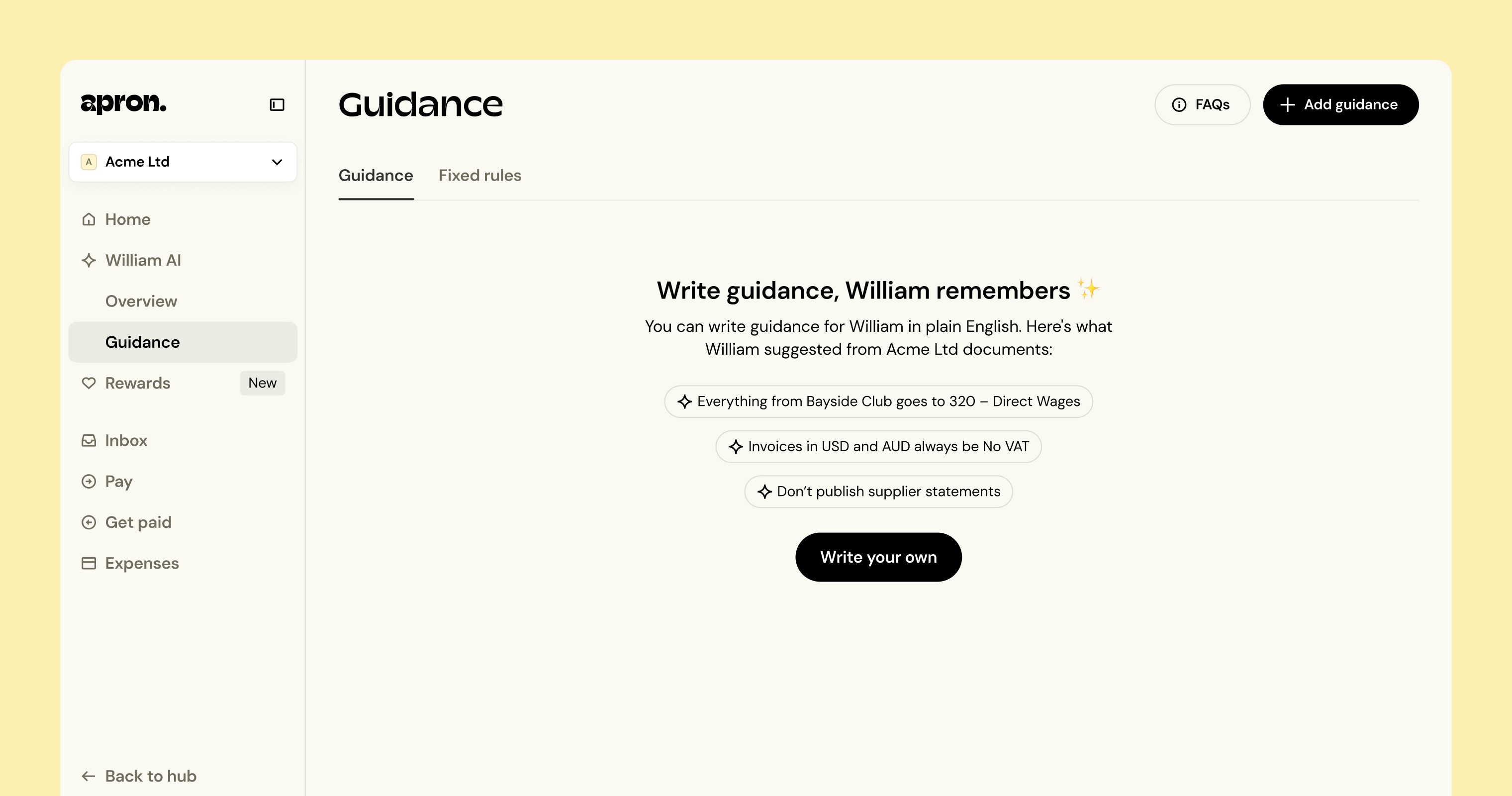
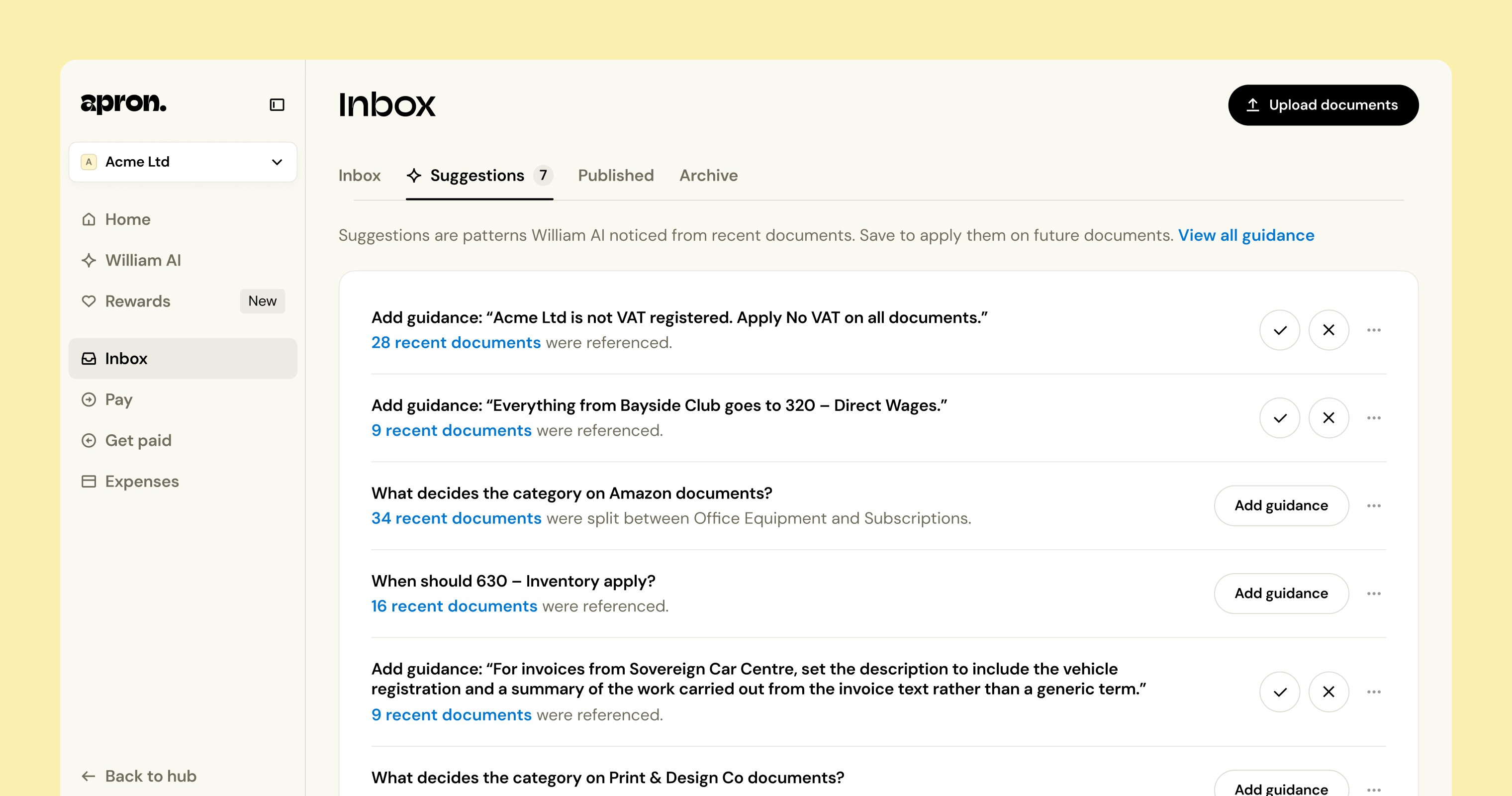
Teach William has been renamed to Guidance, and it's moving out of a standalone tab entirely. Instead of waiting for someone to find it, William will now prompt for guidance directly.

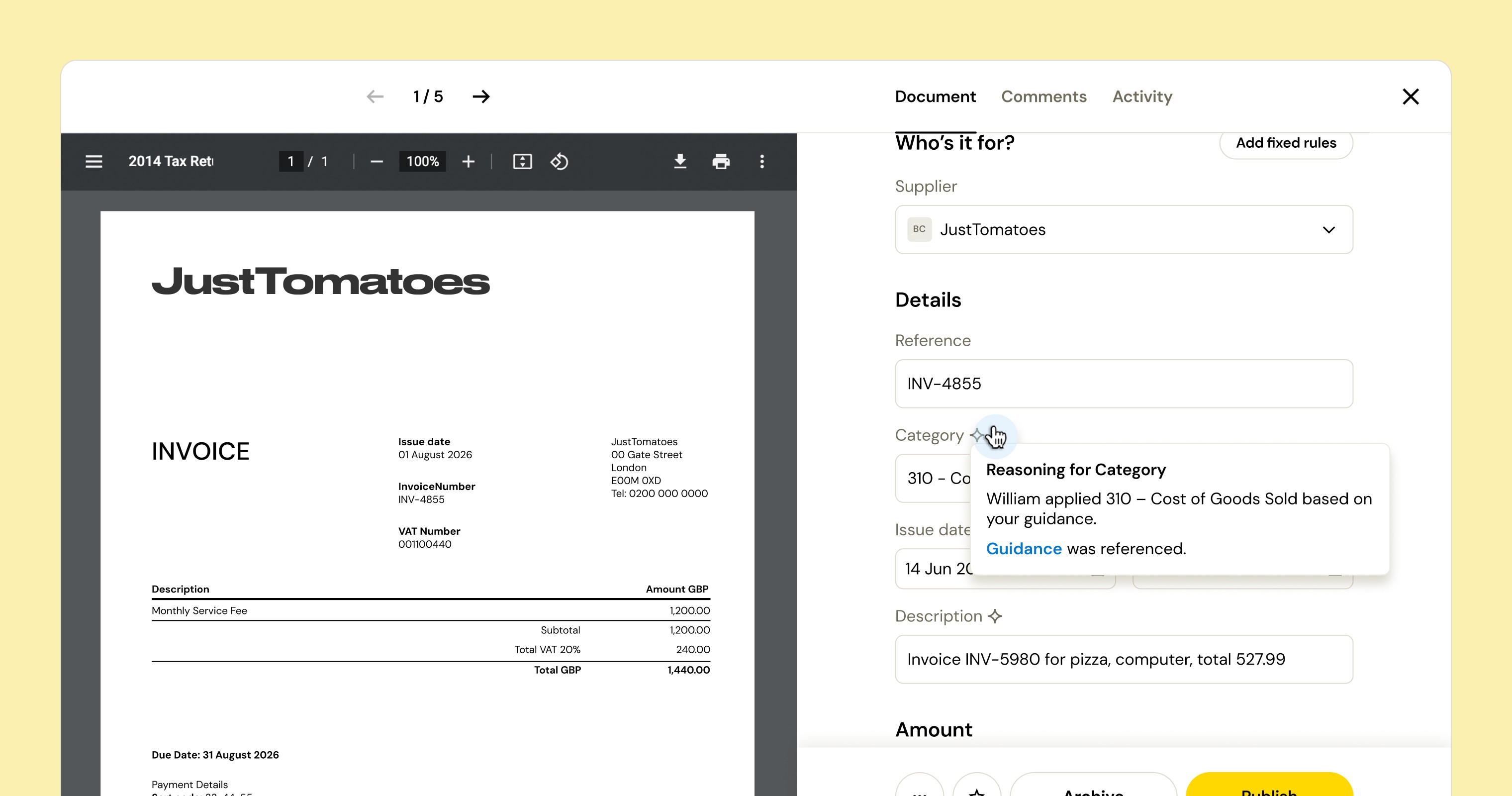
"What we're working on right now will be trying to really boost the adoption for William Guidance by incorporating it in the inbox and the documents," Tallulah explains. "When you change something, William steps in and asks: 'Do you want me to remember that for next time?'"
Many practices already keep an informal record of how they work; Guidance is designed to plug into that same instinct, rather than asking practices to learn a new system.
"What we've found is that some practices tend to keep these in Notion documents or Google docs that they share with new team members," Tallulah says. "So the idea is that you should be able to plug in natural language like that into William."
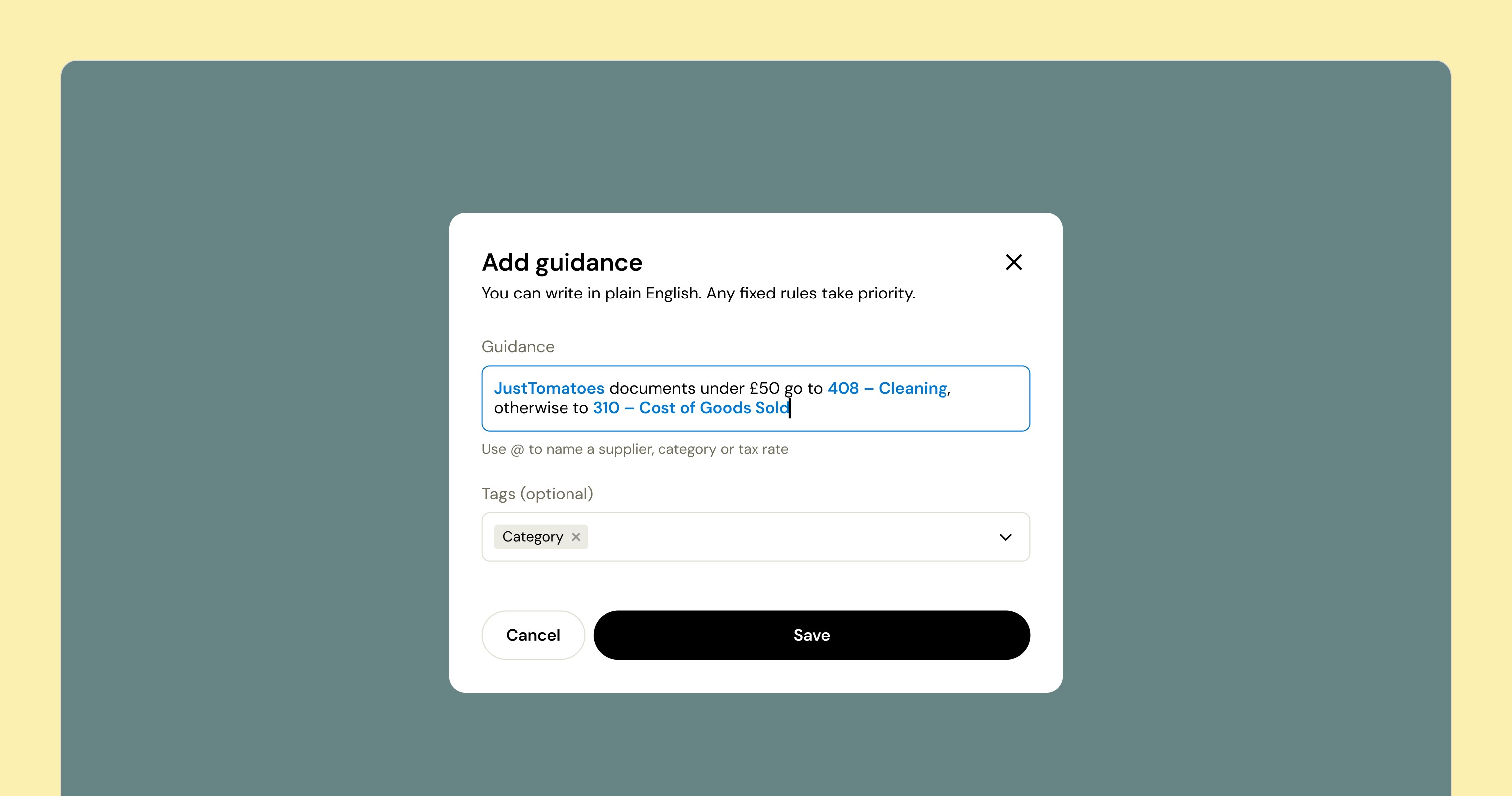
Rules can range from broad categorisation preferences down to individual thresholds, like telling William to hold off publishing anything over a certain amount for manual review instead.
Two upcoming additions show how far this can go. If a practice uses tracking categories, like region, project or department, William will start learning how they're applied and pre-fill the field once it spots the pattern. Want tighter control? Just add Guidance, for example "set the project based on the site address on the invoice."
William is also moving beyond document-level guidance to line items. It can now set the category, VAT rate and tracking category on each individual line, not just the invoice as a whole, and it follows instructions here too. Tell it to 'split supermarket invoices into separate lines for food, drinks and cleaning, each with its own category and VAT rate,' and it will.
It's the kind of granularity accountants and bookkeepers have been asking for, and a good example of what Guidance's move into the inbox makes possible.
Built around real-world feedback
The product team has taken learnings from practices, improved the experience and made the feature more intuitive. But we’re not stopping there. We’ll keep listening to how practices use William, looking at what’s working, not just within bookkeeping, but across businesses too.
The goal is simple: keep making William more useful, more capable and a bigger part of how practices get things done.